Buy mohamedlouizi.eu ?
We are moving the project
mohamedlouizi.eu .
Are you interested in purchasing the domain
mohamedlouizi.eu ?
domain@kv-gmbh.de · 0541-91531010
Buy mohamedlouizi.eu ?
United Nations subsidiaries
United Nations subsidiaries are specialized agencies, funds, and programs that operate under the umbrella of the United Nations to address specific issues such as health, education, and humanitarian assistance. These subsidiaries have their own governing bodies and budgets, but work in coordination with the UN to achieve common goals. Some well-known UN subsidiaries include UNICEF, the World Health Organization (WHO), and the World Food Programme (WFP). These entities play a crucial role in implementing UN initiatives and providing assistance to countries in need around the world. **
United Nations subsidiary
A United Nations subsidiary is an organization that operates under the umbrella of the United Nations but has a specific focus or mandate. These subsidiaries are established to address specific issues such as health, education, or human rights. They work in coordination with the United Nations to achieve common goals and objectives, while also having a degree of autonomy to carry out their specialized work. **


Similar search terms for Nations
Top-Angebote
Products related to Nations:
-
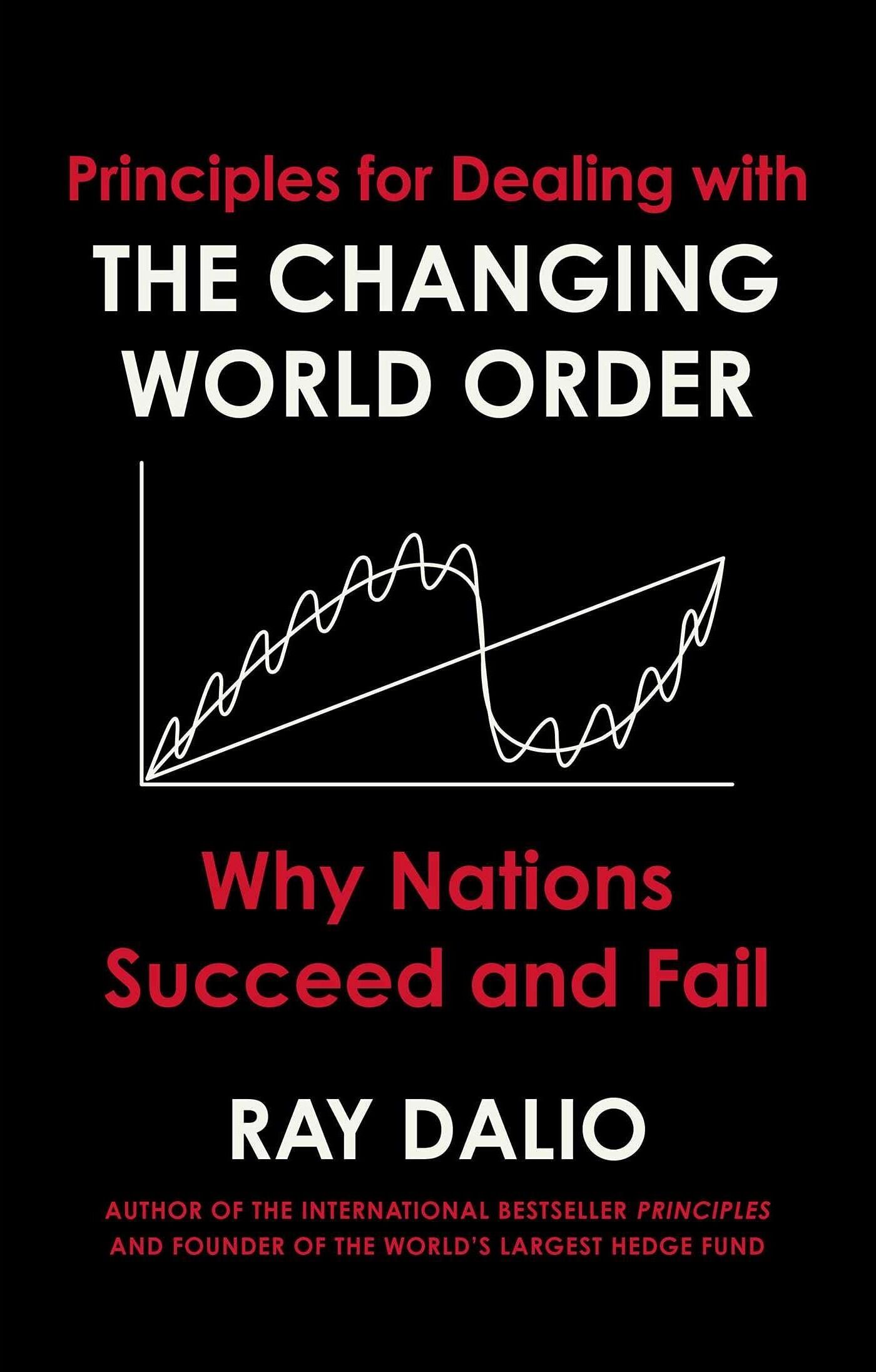
Simon & Schuster UK Principles for Dealing with the Changing World Order: Why Nations Succeed or Fail by Ray DalioFrom legendary investor Ray Dalio, author of the international bestseller Principles, who has spent half a century studying global economies and markets, Principles for Dealing with the Changing World Order examines history’s most turbulent economic and political periods to reveal why the times ahead will likely be radically different from those we’ve experienced in our lifetimes - but similar to those that have happened many times before. A few years ago, Ray Dalio noticed a confluence of political and economic conditions he hadn’t encountered before. They included huge debts and zero or near-zero interest rates that led to massive printing of money in the world’s three major reserve currencies; big political and social conflicts within countries, especially the US, due to the largest wealth, political and values disparities in more than 100 years; and the rising of a world power (China) to challenge the existing world power (US) and the existing world order. The last time that this confluence occurred was between 1930 and 1945. This realisation sent Dalio on a search for the repeating patterns and cause/effect relationships underlying all major changes in wealth and power over the last 500 years. In this remarkable and timely addition to his Principles series, Dalio brings readers along for his study of the major empires - including the Dutch, the British and the American - putting into perspective the 'Big Cycle' that has driven the successes and failures of all the world’s major countries throughout history. Dalio reveals the timeless and universal forces behind these shifts and uses them to look into the future, offering practical principles for positioning oneself for what’s ahead.13,99 £*Shipping: 2,99 £Secure redirect to the provider
-
Principles for Dealing with the Changing World Order: Why Nations Succeed or Fail by Ray Dalio - Non Fiction - Hardback Simon & SchusterPrinciples for Dealing with the Changing World Order examines history’s most turbulent economic and political periods to reveal why the times ahead will likely be radically different from those we’ve experienced in our lifetimes - but similar to those that have happened many times before. A few years ago, Ray Dalio noticed a confluence of political and economic conditions he hadn’t encountered before. They included huge debts and zero or near-zero interest rates that led to massive printing of money in the world’s three major reserve currencies; big political and social conflicts within countries, especially the US, due to the largest wealth, political and values disparities in more than 100 years; and the rising of a world power (China) to challenge the existing world power (US) and the existing world order. The last time that this confluence occurred was between 1930 and 1945. This realisation sent Dalio on a search for the repeating patterns and cause/effect relationships underlying all major changes in wealth and power over the last 500 years. In this remarkable and timely addition to his Principles series, Dalio brings readers along for his study of the major empires - including the Dutch, the British and the American - putting into perspective the 'Big Cycle' that has driven the successes and failures of all the world’s major countries throughout history. Dalio reveals the timeless and universal forces behind these shifts and uses them to look into the future, offering practical principles for positioning oneself for what’s ahead.13,99 £*Shipping: 2,99 £Secure redirect to the provider
-
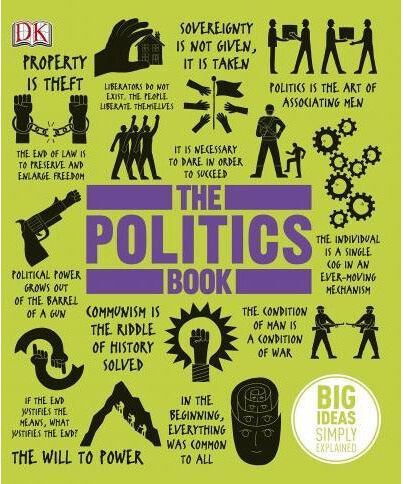
DK The Politics Book - Big Ideas Simply ExplainedThis invaluable; easy-to-understand guide to world politics and government offers an accessible introduction to more than 80 of the most important theories and big ideas of leaders and politicians throughout history. The Politics Book makes government and politics easy to understand by explaining the big ideas simply; using clear language supported by eye-catching graphics. The key events in political history are outlined from the origins of political thinking by Confucius and Aristotle to modern-day activists such as Martin Luther King and Nelson Mandela. Helpful mind maps break down their important concepts into bitesize chunks to make the subject accessible to students of politics and anyone with an interest in how government works. A handy reference section also provides a glossary of key terms and a directory of significant political figures. Filled with thought-provoking quotes from great political thinkers such as Nietzsche; Malcolm X; Karl Marx; and Mao Zedong; The Politics Book gives context to the world of government and power.12,99 £*Shipping: 2,99 £Secure redirect to the provider
-
The Little Book of Politics (DK Big Ideas Series)This politics book is the perfect pocket-sized introduction to politics ideas and political thought throughout history. From the origins of democracy to Machiavelli's cunning statecraft, and from Rousseau's "social contract" to the American Declaration of Independence, Marxist communism, the dawn of populism, and identity politics, The Little Book of Politics examines the philosophies behind the different political beliefs and methods of government used around the world over the course of human history. Packed with diagrams and flowcharts that explain complex concepts in a simple but exciting way, this introduction to politics offers you a combination of clear text and hard-working diagrams in a portable format that is perfect for reading on the go.5,99 £*Shipping: 2,99 £Secure redirect to the provider

-
Which nations are popular?
Some of the most popular nations in the world include the United States, China, India, and Russia. These nations are popular due to their large populations, strong economies, and significant influence on global politics and culture. Additionally, countries like France, Germany, and Japan are also popular due to their rich history, cultural contributions, and economic power. **
-
What are seafaring nations?
Seafaring nations are countries that have a strong historical or current connection to the sea and maritime activities. These nations often have a long tradition of exploration, trade, and naval power. They rely on the sea for transportation, trade, fishing, and sometimes defense. Seafaring nations typically have a significant portion of their population living in coastal areas and have developed a strong maritime culture. **
-
What is the difference between the United Nations and the League of Nations?
The United Nations and the League of Nations are both international organizations aimed at promoting peace and cooperation among nations. However, the League of Nations was established after World War I and failed to prevent World War II due to its lack of enforcement power. In contrast, the United Nations was founded after World War II with a stronger structure, including the Security Council with the power to enforce decisions, making it more effective in maintaining international peace and security. **
-
Founder of the United Nations
The founder of the United Nations is considered to be President Franklin D. Roosevelt of the United States. He played a key role in the creation of the UN during World War II, with the goal of promoting international cooperation and preventing future conflicts. Roosevelt's vision for a global organization that could maintain peace and security among nations led to the establishment of the United Nations in 1945. **
Who works at the United Nations?
The United Nations employs a diverse range of individuals from all over the world. This includes diplomats, international civil servants, peacekeepers, and experts in various fields such as economics, human rights, and humanitarian aid. The organization also works with a wide range of non-governmental organizations, private sector partners, and volunteers to carry out its mission of promoting peace, security, and sustainable development. **
'Which nations do you all have?'
As an AI language model, I do not have any nations. However, I have knowledge about a wide range of nations around the world, including their history, culture, and current events. If you have specific questions about any nation, feel free to ask and I can provide information based on the data available to me. **
Top-Angebote
Products related to Nations:
-
Wilco International LLP The Wealth Of Nations By Adam Smith (Leather Bound)The Wealth of Nations stands as a monumental work in political economy, first published in 1776, where Adam Smith lays out the principles that still shape economic thinking today. This LeatherBound edition presents the full text in a format designed for both study and display. Smith examines how the division of labor boosts productivity, how markets coordinate exchange through self-interest, and how nations grow wealth through trade while navigating the roles of government and institutions. The language is rigorous yet clear, inviting readers from students and professionals to curious readers who want a deep understanding of the forces that govern prices, production, and prosperity. This edition's premium binding adds a sense of permanence to a classic that has influenced policy debates for centuries. It's an ideal choice for a personal library, a classroom reference, or a thoughtful gift for graduates and bibliophiles alike. Whether you are revisiting Smith's arguments for a paper or enjoying them anew, this LeatherBound edition offers a tactile, immersive experience that makes dense economic theory feel accessible and compelling. The compact format invites focused reading sessions, while its durability makes it a long-term reference on any study desk.8,99 £*Shipping: 2,99 £Secure redirect to the provider
-
Icon Books Inside Qatar: Hidden Stories from One of the Richest Nations on Earth by John McManusAN INTIMATE PORTRAIT OF LIFE IN ONE OF THE WORLD'S RICHEST NATIONS AHEAD OF THE FIFA 2022 WORLD CUPJust 75 years ago, the Gulf nation of Qatar was a backwater, reliant on pearl diving. Today it is a gas-laden parvenu with seemingly limitless wealth and ambition. Skyscrapers, museums and futuristic football stadiums rise out of the desert and Ferraris race through the streets. But in the shadows, migrant workers toil in the heat for risible amounts.Inside Qatar reveals how real people live in this surreal place, a land of both great opportunity and great iniquity. Ahead of Qatar's time in the limelight as host of the 2022 FIFA Men's World Cup, anthropologist John McManus lifts a lid on the hidden worlds of its gilded elite, its spin doctors and thrill seekers, its manual labourers and domestic workers.The sum of their tales is not some exotic cabinet of curiosities. Instead, Inside Qatar opens a window onto the global problems - of unfettered capitalism, growing inequality and climate change - that concern us all.7,95 £*Shipping: 2,99 £Secure redirect to the provider
-
Simon & Schuster UK Principles for Dealing with the Changing World Order: Why Nations Succeed or Fail by Ray DalioFrom legendary investor Ray Dalio, author of the international bestseller Principles, who has spent half a century studying global economies and markets, Principles for Dealing with the Changing World Order examines history’s most turbulent economic and political periods to reveal why the times ahead will likely be radically different from those we’ve experienced in our lifetimes - but similar to those that have happened many times before. A few years ago, Ray Dalio noticed a confluence of political and economic conditions he hadn’t encountered before. They included huge debts and zero or near-zero interest rates that led to massive printing of money in the world’s three major reserve currencies; big political and social conflicts within countries, especially the US, due to the largest wealth, political and values disparities in more than 100 years; and the rising of a world power (China) to challenge the existing world power (US) and the existing world order. The last time that this confluence occurred was between 1930 and 1945. This realisation sent Dalio on a search for the repeating patterns and cause/effect relationships underlying all major changes in wealth and power over the last 500 years. In this remarkable and timely addition to his Principles series, Dalio brings readers along for his study of the major empires - including the Dutch, the British and the American - putting into perspective the 'Big Cycle' that has driven the successes and failures of all the world’s major countries throughout history. Dalio reveals the timeless and universal forces behind these shifts and uses them to look into the future, offering practical principles for positioning oneself for what’s ahead.13,99 £*Shipping: 2,99 £Secure redirect to the provider
-
Principles for Dealing with the Changing World Order: Why Nations Succeed or Fail by Ray Dalio - Non Fiction - Hardback Simon & SchusterPrinciples for Dealing with the Changing World Order examines history’s most turbulent economic and political periods to reveal why the times ahead will likely be radically different from those we’ve experienced in our lifetimes - but similar to those that have happened many times before. A few years ago, Ray Dalio noticed a confluence of political and economic conditions he hadn’t encountered before. They included huge debts and zero or near-zero interest rates that led to massive printing of money in the world’s three major reserve currencies; big political and social conflicts within countries, especially the US, due to the largest wealth, political and values disparities in more than 100 years; and the rising of a world power (China) to challenge the existing world power (US) and the existing world order. The last time that this confluence occurred was between 1930 and 1945. This realisation sent Dalio on a search for the repeating patterns and cause/effect relationships underlying all major changes in wealth and power over the last 500 years. In this remarkable and timely addition to his Principles series, Dalio brings readers along for his study of the major empires - including the Dutch, the British and the American - putting into perspective the 'Big Cycle' that has driven the successes and failures of all the world’s major countries throughout history. Dalio reveals the timeless and universal forces behind these shifts and uses them to look into the future, offering practical principles for positioning oneself for what’s ahead.13,99 £*Shipping: 2,99 £Secure redirect to the provider
-
United Nations subsidiaries
United Nations subsidiaries are specialized agencies, funds, and programs that operate under the umbrella of the United Nations to address specific issues such as health, education, and humanitarian assistance. These subsidiaries have their own governing bodies and budgets, but work in coordination with the UN to achieve common goals. Some well-known UN subsidiaries include UNICEF, the World Health Organization (WHO), and the World Food Programme (WFP). These entities play a crucial role in implementing UN initiatives and providing assistance to countries in need around the world. **
-
United Nations subsidiary
A United Nations subsidiary is an organization that operates under the umbrella of the United Nations but has a specific focus or mandate. These subsidiaries are established to address specific issues such as health, education, or human rights. They work in coordination with the United Nations to achieve common goals and objectives, while also having a degree of autonomy to carry out their specialized work. **
-
Which nations are popular?
Some of the most popular nations in the world include the United States, China, India, and Russia. These nations are popular due to their large populations, strong economies, and significant influence on global politics and culture. Additionally, countries like France, Germany, and Japan are also popular due to their rich history, cultural contributions, and economic power. **
-
What are seafaring nations?
Seafaring nations are countries that have a strong historical or current connection to the sea and maritime activities. These nations often have a long tradition of exploration, trade, and naval power. They rely on the sea for transportation, trade, fishing, and sometimes defense. Seafaring nations typically have a significant portion of their population living in coastal areas and have developed a strong maritime culture. **
Similar search terms for Nations
-
DK The Politics Book - Big Ideas Simply ExplainedThis invaluable; easy-to-understand guide to world politics and government offers an accessible introduction to more than 80 of the most important theories and big ideas of leaders and politicians throughout history. The Politics Book makes government and politics easy to understand by explaining the big ideas simply; using clear language supported by eye-catching graphics. The key events in political history are outlined from the origins of political thinking by Confucius and Aristotle to modern-day activists such as Martin Luther King and Nelson Mandela. Helpful mind maps break down their important concepts into bitesize chunks to make the subject accessible to students of politics and anyone with an interest in how government works. A handy reference section also provides a glossary of key terms and a directory of significant political figures. Filled with thought-provoking quotes from great political thinkers such as Nietzsche; Malcolm X; Karl Marx; and Mao Zedong; The Politics Book gives context to the world of government and power.12,99 £*Shipping: 2,99 £Secure redirect to the provider
-
The Little Book of Politics (DK Big Ideas Series)This politics book is the perfect pocket-sized introduction to politics ideas and political thought throughout history. From the origins of democracy to Machiavelli's cunning statecraft, and from Rousseau's "social contract" to the American Declaration of Independence, Marxist communism, the dawn of populism, and identity politics, The Little Book of Politics examines the philosophies behind the different political beliefs and methods of government used around the world over the course of human history. Packed with diagrams and flowcharts that explain complex concepts in a simple but exciting way, this introduction to politics offers you a combination of clear text and hard-working diagrams in a portable format that is perfect for reading on the go.5,99 £*Shipping: 2,99 £Secure redirect to the provider
-
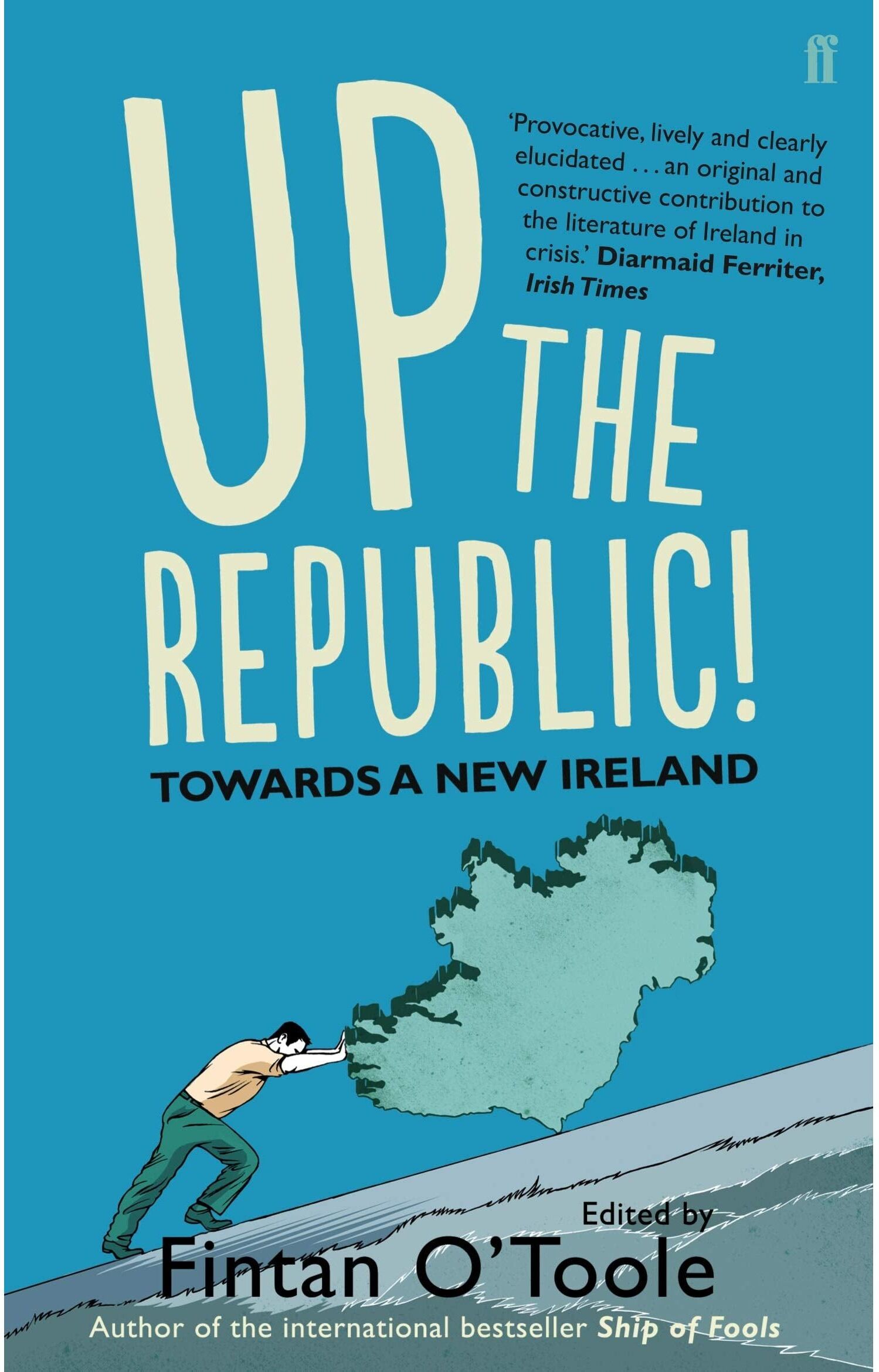
Faber Fintan O'Toole, Up the Republic! (Economic Book, Politics Book)Fintan O'Toole, Up the Republic! (Economic Book, Politics Book) In this important book, historians, lawyers, economists and writers come together to put a coherent case: that although the Irish economic collapse has resulted in national humiliation, renewed emigration and a decline in living standards for the majority of the population, there is still hope that the country can be reformed and renewed. Irish politicians offered the now notorious blanket guarantee to all the banks which had got in over their heads during the great property bubble - including one that had become little more than a criminal enterprise. A different set of politicians grimly enforces the consequences of that guarantee, locking an entire generation of Irish men and women into paying for the mistakes of greedy bankers and their corrupt friends in government. The energy of hope has to come from elsewhere. These essays demonstrate how simple measures and different economic and social policies could release that energy and fulfil the promise of an educated, literate and culturally vibrant people.4,99 £*Shipping: 1,99 £Secure redirect to the provider
-
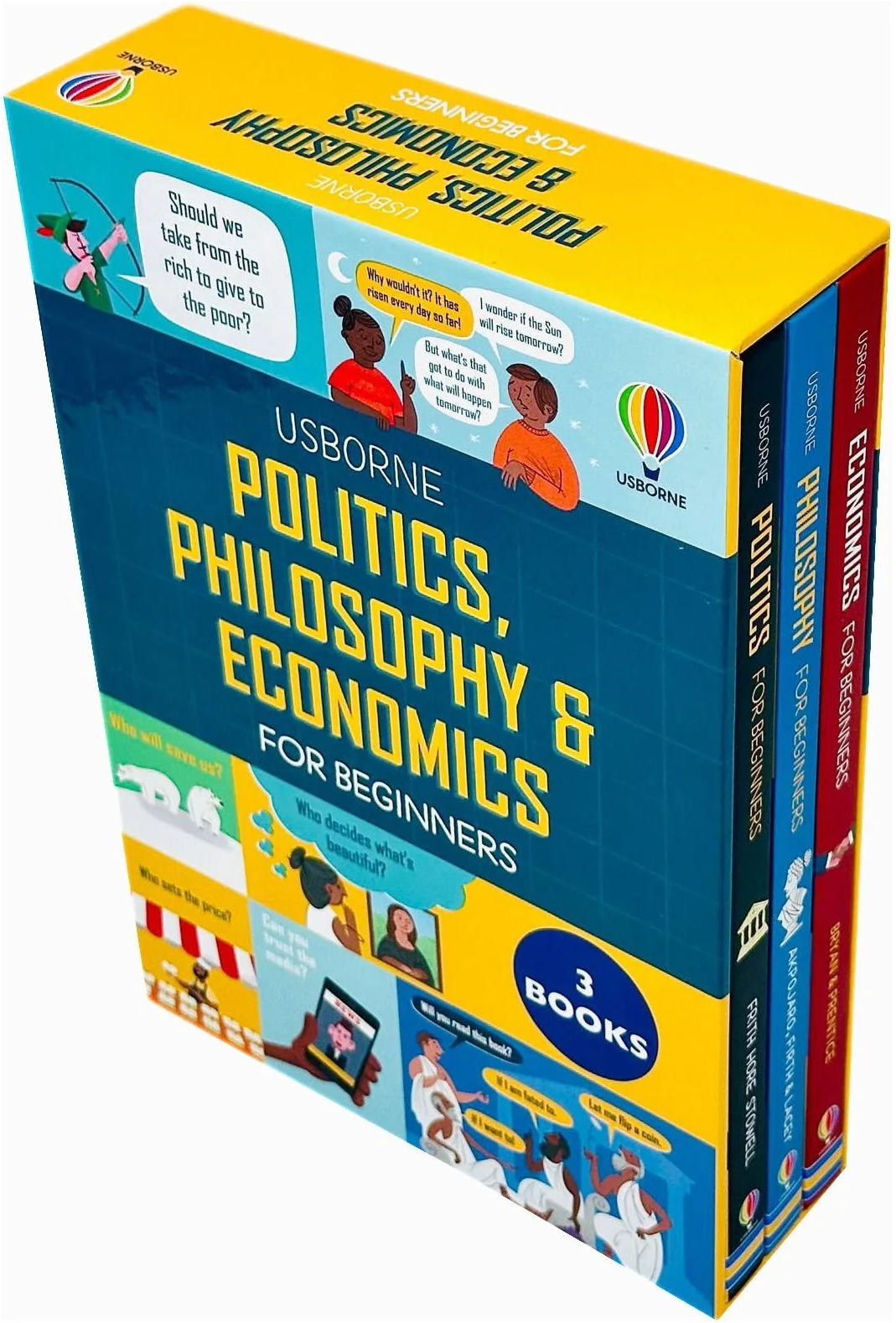
Usborne Big Subjects For Beginners 3 Books Box Set (Politics, Philosophy and Economics)Usborne Big Subjects For Beginners 3 Books Box Set (Politics, Philosophy and Economics) Economics for Beginners Nobody has everything they need, all the time - so how can we make do with what we have? Economics is all about understanding the choices we make to solve this problem. With bright, infographics pictures, this informative book describes why markets. Politics for Beginners With Brexit looming and constant political uncertainty in the UK, people are more confused by politics than ever before. Politics for Beginners answers the questions that people are afraid to ask, offering a no-nonsense guide to what politics is all about. Philosophy for Beginners Philosophy is a way of thinking about just about anything. It asks big questions, such as "how can I be good?" or "what makes something beautiful?" Using lively examples, humorous illustrations and simple thought experiments, this book opens up the world of philosophy to both children and adults and includes links to recommended. Related Tags: Usborne, Usbourne Books14,95 £*Shipping: 2,99 £Secure redirect to the provider
-
What is the difference between the United Nations and the League of Nations?
The United Nations and the League of Nations are both international organizations aimed at promoting peace and cooperation among nations. However, the League of Nations was established after World War I and failed to prevent World War II due to its lack of enforcement power. In contrast, the United Nations was founded after World War II with a stronger structure, including the Security Council with the power to enforce decisions, making it more effective in maintaining international peace and security. **
-
Founder of the United Nations
The founder of the United Nations is considered to be President Franklin D. Roosevelt of the United States. He played a key role in the creation of the UN during World War II, with the goal of promoting international cooperation and preventing future conflicts. Roosevelt's vision for a global organization that could maintain peace and security among nations led to the establishment of the United Nations in 1945. **
-
Who works at the United Nations?
The United Nations employs a diverse range of individuals from all over the world. This includes diplomats, international civil servants, peacekeepers, and experts in various fields such as economics, human rights, and humanitarian aid. The organization also works with a wide range of non-governmental organizations, private sector partners, and volunteers to carry out its mission of promoting peace, security, and sustainable development. **
-
'Which nations do you all have?'
As an AI language model, I do not have any nations. However, I have knowledge about a wide range of nations around the world, including their history, culture, and current events. If you have specific questions about any nation, feel free to ask and I can provide information based on the data available to me. **
* All prices are inclusive of VAT and, if applicable, plus shipping costs. The offer information is based on the details provided by the respective shop and is updated through automated processes. Real-time updates do not occur, so deviations can occur in individual cases. ** Note: Parts of this content were created by AI.