Buy mohamedlouizi.eu ?
We are moving the project
mohamedlouizi.eu .
Are you interested in purchasing the domain
mohamedlouizi.eu ?
domain@kv-gmbh.de · 0541-91531010
Buy mohamedlouizi.eu ?
What is the history of monotheism?
Monotheism, the belief in a single, all-powerful deity, has a long and complex history. It is often associated with the ancient Hebrews and the development of Judaism, which emerged around 2000 BCE. The concept of monotheism also appears in the teachings of Zoroaster in ancient Persia, and later in the development of Christianity and Islam. These monotheistic religions have had a profound impact on the development of human civilization, shaping moral and ethical systems, art, literature, and politics. The history of monotheism is a rich and diverse tapestry, with its influence felt across the globe. **
What is a question about monotheism?
One question about monotheism could be: How does the concept of one all-powerful deity in monotheistic religions impact the way followers view morality and ethics? **
Similar search terms for Monotheism
Top-Angebote
Products related to Monotheism:
-
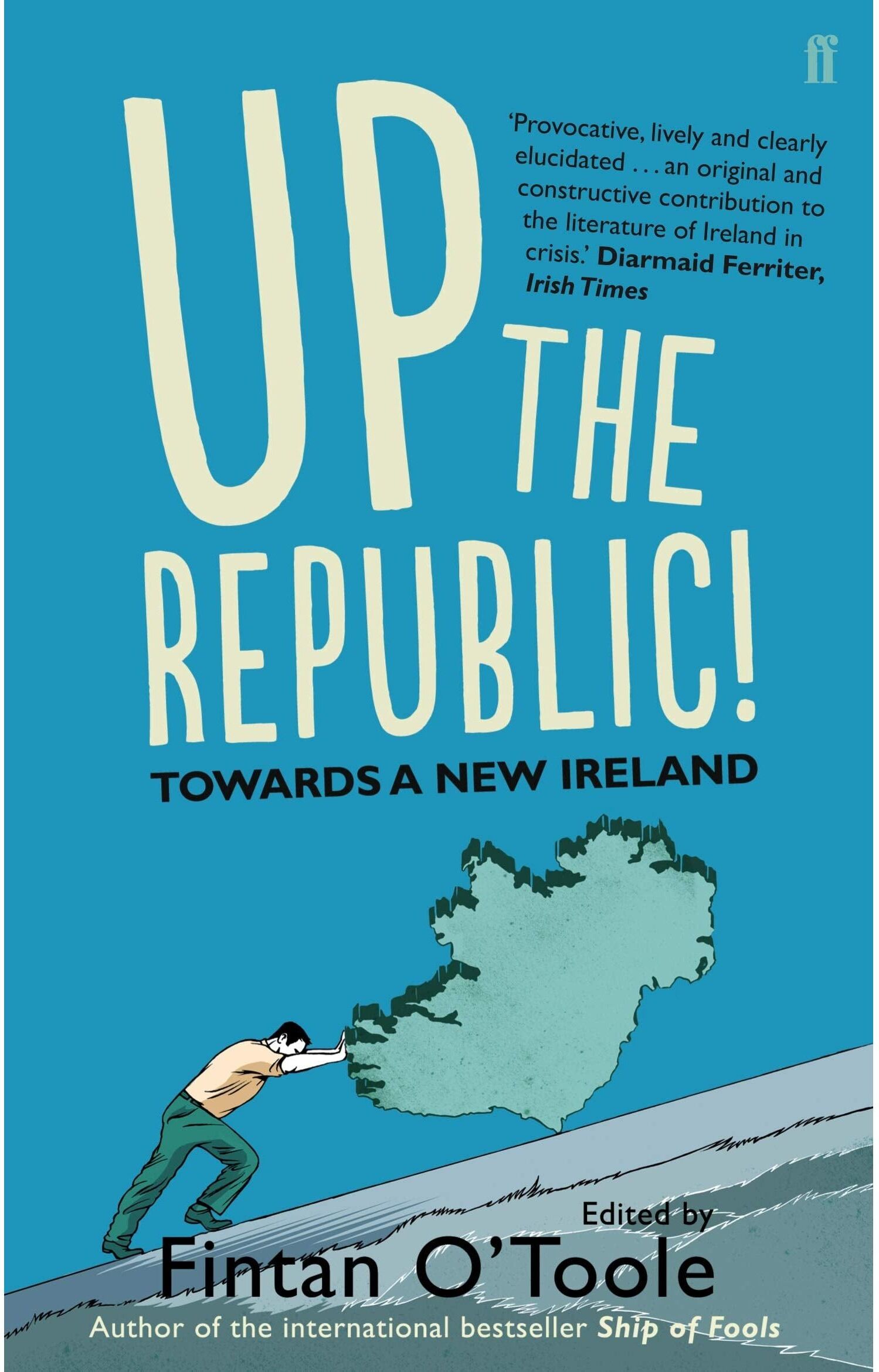
Faber Fintan O'Toole, Up the Republic! (Economic Book, Politics Book)Fintan O'Toole, Up the Republic! (Economic Book, Politics Book) In this important book, historians, lawyers, economists and writers come together to put a coherent case: that although the Irish economic collapse has resulted in national humiliation, renewed emigration and a decline in living standards for the majority of the population, there is still hope that the country can be reformed and renewed. Irish politicians offered the now notorious blanket guarantee to all the banks which had got in over their heads during the great property bubble - including one that had become little more than a criminal enterprise. A different set of politicians grimly enforces the consequences of that guarantee, locking an entire generation of Irish men and women into paying for the mistakes of greedy bankers and their corrupt friends in government. The energy of hope has to come from elsewhere. These essays demonstrate how simple measures and different economic and social policies could release that energy and fulfil the promise of an educated, literate and culturally vibrant people.4,99 £*Shipping: 1,99 £Secure redirect to the provider
-
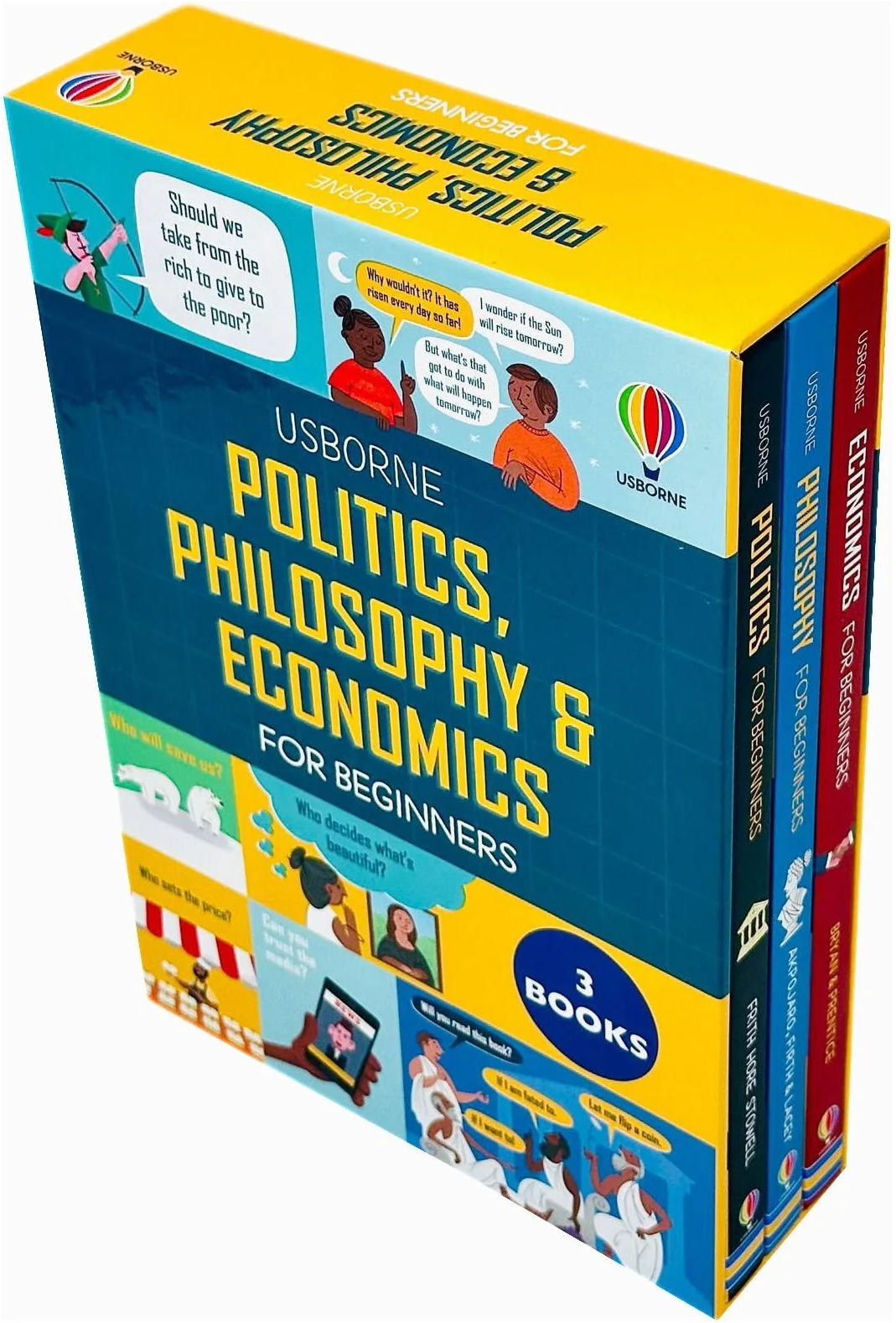
Usborne Big Subjects For Beginners 3 Books Box Set (Politics, Philosophy and Economics)Usborne Big Subjects For Beginners 3 Books Box Set (Politics, Philosophy and Economics) Economics for Beginners Nobody has everything they need, all the time - so how can we make do with what we have? Economics is all about understanding the choices we make to solve this problem. With bright, infographics pictures, this informative book describes why markets. Politics for Beginners With Brexit looming and constant political uncertainty in the UK, people are more confused by politics than ever before. Politics for Beginners answers the questions that people are afraid to ask, offering a no-nonsense guide to what politics is all about. Philosophy for Beginners Philosophy is a way of thinking about just about anything. It asks big questions, such as "how can I be good?" or "what makes something beautiful?" Using lively examples, humorous illustrations and simple thought experiments, this book opens up the world of philosophy to both children and adults and includes links to recommended. Related Tags: Usborne, Usbourne Books14,95 £*Shipping: 2,99 £Secure redirect to the provider
-
O'Neill s O'riginals Reform Vintage T-Shirt in Carob Brown, Size SmallThe O'Riginals Men's Reform Vintage Short Sleeve Tee is crafted from 100% organic cotton with a relaxed fit that moves with you. This O'Riginals tee features garment-dyed fabric and crackle ink graphics for that perfectly worn-in look. Built...38,00 $*Shipping: 0,00 $Secure redirect to the provider
-
O'Neill s O'riginals Reform Vintage T-Shirt in Carob Brown, Size MediumThe O'Riginals Men's Reform Vintage Short Sleeve Tee is crafted from 100% organic cotton with a relaxed fit that moves with you. This O'Riginals tee features garment-dyed fabric and crackle ink graphics for that perfectly worn-in look. Built...38,00 $*Shipping: 0,00 $Secure redirect to the provider


-
Can pantheism be equated with monotheism?
Pantheism and monotheism are two distinct belief systems. Pantheism holds that the divine is present in everything in the universe, while monotheism believes in the existence of a single, personal God who created and rules over the universe. While both concepts involve a belief in a higher power, they differ in their understanding of the nature and relationship of this power to the world. Therefore, pantheism cannot be equated with monotheism as they have fundamentally different views on the nature of divinity. **
-
Is the Trinity in Christianity also monotheism?
Yes, the Trinity in Christianity is considered monotheism. While the concept of the Trinity acknowledges three distinct persons - the Father, the Son (Jesus Christ), and the Holy Spirit - they are believed to be one God. This belief is rooted in the idea that these three persons are all equally God, sharing the same divine essence and working together in perfect unity. Thus, despite the complexity of the Trinity, it is still understood within Christianity as a belief in one God. **
-
Can someone explain the terms polytheism and monotheism?
Polytheism is the belief in and worship of multiple deities or gods. This means that followers of polytheistic religions believe in the existence of several gods, each with their own powers and responsibilities. Examples of polytheistic religions include Hinduism, ancient Greek and Roman religions, and various indigenous belief systems. On the other hand, monotheism is the belief in and worship of a single, all-powerful deity. This means that followers of monotheistic religions believe in the existence of only one god, who is seen as the creator and ruler of the universe. Examples of monotheistic religions include Christianity, Islam, and Judaism. **
-
What is the difference between polyphonic and polyvalent monotheism?
Polyphonic monotheism refers to the belief in multiple manifestations or aspects of a single deity, where different gods or goddesses are seen as different expressions of the same divine essence. This is common in Hinduism, where different deities represent different aspects of the ultimate reality. On the other hand, polyvalent monotheism refers to the belief in a single deity with multiple attributes or characteristics, where the divine is seen as having many different qualities or roles. This is seen in the Abrahamic religions, where God is believed to be all-knowing, all-powerful, and all-loving, among other attributes. **


How did the emergence of monotheism in Israel unfold?
The emergence of monotheism in Israel unfolded gradually over time. It began with the early Israelites' belief in a tribal deity, Yahweh, who was seen as their protector and provider. As the Israelites encountered other cultures and religions, they began to emphasize the uniqueness and supremacy of Yahweh, eventually leading to the development of monotheistic beliefs. This process was influenced by various historical and cultural factors, including the Israelites' experiences of exile and captivity, as well as the teachings of influential prophets such as Moses and Isaiah. Ultimately, the emergence of monotheism in Israel marked a significant shift in religious thought and practice, shaping the development of Judaism and influencing other monotheistic religions. **
How did the development of monotheism in Israel unfold?
The development of monotheism in Israel unfolded gradually over time. Initially, the Israelites were polytheistic, worshiping multiple gods. However, as they faced various challenges and experiences, their belief in one all-powerful God, Yahweh, began to solidify. This transition was influenced by prophets such as Moses, who emphasized the worship of Yahweh alone. Eventually, monotheism became a central tenet of Israelite religion, as seen in the Hebrew Bible. **
Top-Angebote
Products related to Monotheism:
-
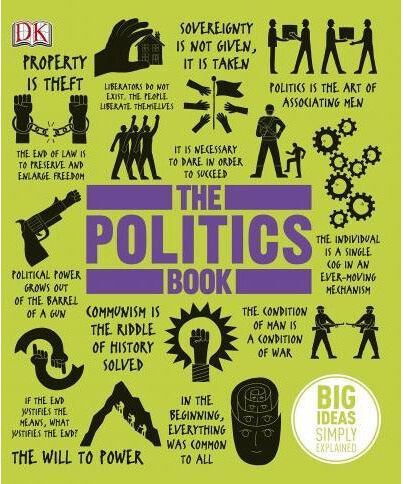
DK The Politics Book - Big Ideas Simply ExplainedThis invaluable; easy-to-understand guide to world politics and government offers an accessible introduction to more than 80 of the most important theories and big ideas of leaders and politicians throughout history. The Politics Book makes government and politics easy to understand by explaining the big ideas simply; using clear language supported by eye-catching graphics. The key events in political history are outlined from the origins of political thinking by Confucius and Aristotle to modern-day activists such as Martin Luther King and Nelson Mandela. Helpful mind maps break down their important concepts into bitesize chunks to make the subject accessible to students of politics and anyone with an interest in how government works. A handy reference section also provides a glossary of key terms and a directory of significant political figures. Filled with thought-provoking quotes from great political thinkers such as Nietzsche; Malcolm X; Karl Marx; and Mao Zedong; The Politics Book gives context to the world of government and power.12,99 £*Shipping: 2,99 £Secure redirect to the provider
-
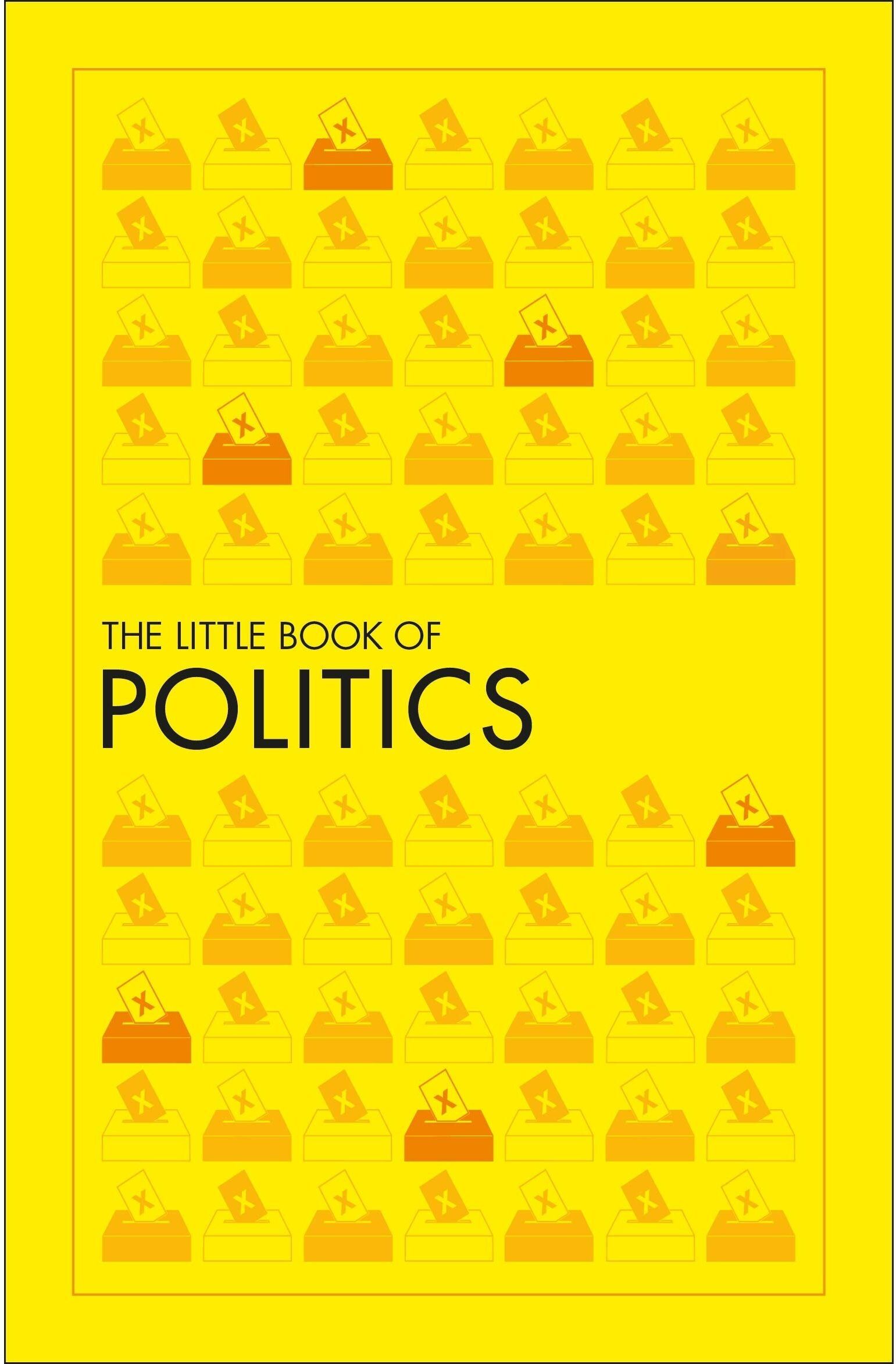
The Little Book of Politics (DK Big Ideas Series)This politics book is the perfect pocket-sized introduction to politics ideas and political thought throughout history. From the origins of democracy to Machiavelli's cunning statecraft, and from Rousseau's "social contract" to the American Declaration of Independence, Marxist communism, the dawn of populism, and identity politics, The Little Book of Politics examines the philosophies behind the different political beliefs and methods of government used around the world over the course of human history. Packed with diagrams and flowcharts that explain complex concepts in a simple but exciting way, this introduction to politics offers you a combination of clear text and hard-working diagrams in a portable format that is perfect for reading on the go.5,99 £*Shipping: 2,99 £Secure redirect to the provider
-
Faber Fintan O'Toole, Up the Republic! (Economic Book, Politics Book)Fintan O'Toole, Up the Republic! (Economic Book, Politics Book) In this important book, historians, lawyers, economists and writers come together to put a coherent case: that although the Irish economic collapse has resulted in national humiliation, renewed emigration and a decline in living standards for the majority of the population, there is still hope that the country can be reformed and renewed. Irish politicians offered the now notorious blanket guarantee to all the banks which had got in over their heads during the great property bubble - including one that had become little more than a criminal enterprise. A different set of politicians grimly enforces the consequences of that guarantee, locking an entire generation of Irish men and women into paying for the mistakes of greedy bankers and their corrupt friends in government. The energy of hope has to come from elsewhere. These essays demonstrate how simple measures and different economic and social policies could release that energy and fulfil the promise of an educated, literate and culturally vibrant people.4,99 £*Shipping: 1,99 £Secure redirect to the provider
-
Usborne Big Subjects For Beginners 3 Books Box Set (Politics, Philosophy and Economics)Usborne Big Subjects For Beginners 3 Books Box Set (Politics, Philosophy and Economics) Economics for Beginners Nobody has everything they need, all the time - so how can we make do with what we have? Economics is all about understanding the choices we make to solve this problem. With bright, infographics pictures, this informative book describes why markets. Politics for Beginners With Brexit looming and constant political uncertainty in the UK, people are more confused by politics than ever before. Politics for Beginners answers the questions that people are afraid to ask, offering a no-nonsense guide to what politics is all about. Philosophy for Beginners Philosophy is a way of thinking about just about anything. It asks big questions, such as "how can I be good?" or "what makes something beautiful?" Using lively examples, humorous illustrations and simple thought experiments, this book opens up the world of philosophy to both children and adults and includes links to recommended. Related Tags: Usborne, Usbourne Books14,95 £*Shipping: 2,99 £Secure redirect to the provider
-
What is the history of monotheism?
Monotheism, the belief in a single, all-powerful deity, has a long and complex history. It is often associated with the ancient Hebrews and the development of Judaism, which emerged around 2000 BCE. The concept of monotheism also appears in the teachings of Zoroaster in ancient Persia, and later in the development of Christianity and Islam. These monotheistic religions have had a profound impact on the development of human civilization, shaping moral and ethical systems, art, literature, and politics. The history of monotheism is a rich and diverse tapestry, with its influence felt across the globe. **
-
What is a question about monotheism?
One question about monotheism could be: How does the concept of one all-powerful deity in monotheistic religions impact the way followers view morality and ethics? **
-
Can pantheism be equated with monotheism?
Pantheism and monotheism are two distinct belief systems. Pantheism holds that the divine is present in everything in the universe, while monotheism believes in the existence of a single, personal God who created and rules over the universe. While both concepts involve a belief in a higher power, they differ in their understanding of the nature and relationship of this power to the world. Therefore, pantheism cannot be equated with monotheism as they have fundamentally different views on the nature of divinity. **
-
Is the Trinity in Christianity also monotheism?
Yes, the Trinity in Christianity is considered monotheism. While the concept of the Trinity acknowledges three distinct persons - the Father, the Son (Jesus Christ), and the Holy Spirit - they are believed to be one God. This belief is rooted in the idea that these three persons are all equally God, sharing the same divine essence and working together in perfect unity. Thus, despite the complexity of the Trinity, it is still understood within Christianity as a belief in one God. **
Similar search terms for Monotheism
-
O'Neill s O'riginals Reform Vintage T-Shirt in Carob Brown, Size SmallThe O'Riginals Men's Reform Vintage Short Sleeve Tee is crafted from 100% organic cotton with a relaxed fit that moves with you. This O'Riginals tee features garment-dyed fabric and crackle ink graphics for that perfectly worn-in look. Built...38,00 $*Shipping: 0,00 $Secure redirect to the provider
-
O'Neill s O'riginals Reform Vintage T-Shirt in Carob Brown, Size MediumThe O'Riginals Men's Reform Vintage Short Sleeve Tee is crafted from 100% organic cotton with a relaxed fit that moves with you. This O'Riginals tee features garment-dyed fabric and crackle ink graphics for that perfectly worn-in look. Built...38,00 $*Shipping: 0,00 $Secure redirect to the provider
-
O'Neill s O'riginals Reform Vintage T-Shirt in Carob Brown, Size LargeThe O'Riginals Men's Reform Vintage Short Sleeve Tee is crafted from 100% organic cotton with a relaxed fit that moves with you. This O'Riginals tee features garment-dyed fabric and crackle ink graphics for that perfectly worn-in look. Built...38,00 $*Shipping: 0,00 $Secure redirect to the provider
-
O'Neill s O'riginals Reform Vintage T-Shirt in Carob Brown, Size XLThe O'Riginals Men's Reform Vintage Short Sleeve Tee is crafted from 100% organic cotton with a relaxed fit that moves with you. This O'Riginals tee features garment-dyed fabric and crackle ink graphics for that perfectly worn-in look. Built...38,00 $*Shipping: 0,00 $Secure redirect to the provider
-
Can someone explain the terms polytheism and monotheism?
Polytheism is the belief in and worship of multiple deities or gods. This means that followers of polytheistic religions believe in the existence of several gods, each with their own powers and responsibilities. Examples of polytheistic religions include Hinduism, ancient Greek and Roman religions, and various indigenous belief systems. On the other hand, monotheism is the belief in and worship of a single, all-powerful deity. This means that followers of monotheistic religions believe in the existence of only one god, who is seen as the creator and ruler of the universe. Examples of monotheistic religions include Christianity, Islam, and Judaism. **
-
What is the difference between polyphonic and polyvalent monotheism?
Polyphonic monotheism refers to the belief in multiple manifestations or aspects of a single deity, where different gods or goddesses are seen as different expressions of the same divine essence. This is common in Hinduism, where different deities represent different aspects of the ultimate reality. On the other hand, polyvalent monotheism refers to the belief in a single deity with multiple attributes or characteristics, where the divine is seen as having many different qualities or roles. This is seen in the Abrahamic religions, where God is believed to be all-knowing, all-powerful, and all-loving, among other attributes. **
-
How did the emergence of monotheism in Israel unfold?
The emergence of monotheism in Israel unfolded gradually over time. It began with the early Israelites' belief in a tribal deity, Yahweh, who was seen as their protector and provider. As the Israelites encountered other cultures and religions, they began to emphasize the uniqueness and supremacy of Yahweh, eventually leading to the development of monotheistic beliefs. This process was influenced by various historical and cultural factors, including the Israelites' experiences of exile and captivity, as well as the teachings of influential prophets such as Moses and Isaiah. Ultimately, the emergence of monotheism in Israel marked a significant shift in religious thought and practice, shaping the development of Judaism and influencing other monotheistic religions. **
-
How did the development of monotheism in Israel unfold?
The development of monotheism in Israel unfolded gradually over time. Initially, the Israelites were polytheistic, worshiping multiple gods. However, as they faced various challenges and experiences, their belief in one all-powerful God, Yahweh, began to solidify. This transition was influenced by prophets such as Moses, who emphasized the worship of Yahweh alone. Eventually, monotheism became a central tenet of Israelite religion, as seen in the Hebrew Bible. **
* All prices are inclusive of VAT and, if applicable, plus shipping costs. The offer information is based on the details provided by the respective shop and is updated through automated processes. Real-time updates do not occur, so deviations can occur in individual cases. ** Note: Parts of this content were created by AI.