Buy mohamedlouizi.eu ?
We are moving the project
mohamedlouizi.eu .
Are you interested in purchasing the domain
mohamedlouizi.eu ?
domain@kv-gmbh.de · 0541-91531010
Buy mohamedlouizi.eu ?
What is the Ebert-Groener Pact?
The Ebert-Groener Pact was a secret agreement made in November 1918 between German President Friedrich Ebert and General Wilhelm Groener, the head of the German army. The pact aimed to ensure the cooperation of the military with the new Weimar government in exchange for the government's support of the army's authority and structure. This agreement helped to prevent a potential military coup and secure the stability of the new German government during a period of political upheaval and revolution. **
What is the Dolchstoßlegende by Friedrich Ebert?
The Dolchstoßlegende, or "stab-in-the-back myth," was a conspiracy theory popularized by German political and military leaders after World War I. It claimed that Germany's defeat in the war was not due to military failure, but rather to betrayal by civilians, socialists, and Jews on the home front. Friedrich Ebert, the first President of the Weimar Republic, was accused of being part of this alleged betrayal. The myth was used to shift blame away from the military and aristocracy, and to undermine the legitimacy of the new democratic government. **


Similar search terms for Ebert
Top-Angebote
Products related to Ebert:
-
Zaffre/Pan Lily's Promise by Lily Ebert and The Tattooist of Auschwitz Series by Heather Morris 4 Books SetLily's Promise by Lily Ebert and The Tattooist of Auschwitz Series by Heather Morris 4 Books Set Lily's Promise: How I Survived Auschwitz and Found the Strength to Live by Lily Ebert When Holocaust survivor Lily Ebert was liberated in 1945, a Jewish-American soldier gave her a banknote on which he’d written ‘Good luck and happiness’. Many decades later her great-grandson, Dov, decided to use social media to track down the family of the GI – and 96-year-old Lily found herself making headlines round the world. Lily had promised herself that if she survived Auschwitz, she would tell everyone the truth about the camp. Now was her chance. In Lily’s Promise she writes movingly about her happy childhood in Hungary, the death of her mother and two youngest siblings on their arrival at Auschwitz in 1944 and her determination to keep her two other sisters safe. She describes the inhumanity of the camp and the small acts of defiance that gave her strength. From there she and her sisters became slave labour in a munitions factory, and then faced a death march that they barely survived. Three Sisters by Heather Morris When they are little girls, Cibi, Magda and Livia make a promise to their father - that they will stay together, no matter what. Years later, at just 15, Livia is ordered to Auschwitz by the Nazis. Cibi, only 19 herself, remembers their promise and follows Livia, determined to protect her sister, or die with her. Together, they fight to survive through unimaginable cruelty and hardship. The Tattooist of Auschwitz by Heather Morris In 1942, Lale Sokolov arrived in Auschwitz-Birkenau. He was given the job of tattooing the prisoners marked for survival - scratching numbers into his fellow victims' arms in indelible ink to create what would become one of the most potent symbols of the Holocaust. Waiting in line to be tattooed, terrified and shaking, was a young girl. For Lale - a dandy, a jack-the-lad, a bit of a chancer - it was love at first sight. And he was determined not only to survive himself, but to ensure this woman, Gita, did, too. Cilka's Journey by Heather Morris In 1942 Cilka Klein is just sixteen years old when she is taken to Auschwitz-Birkenau Concentration Camp. The Commandant at Birkenau, Schwarzhuber, notices her long beautiful hair, and forces her separation from the other women prisoners. Cilka learns quickly that power, even unwillingly given, equals survival. After liberation, Cilka is charged as a collaborator by the Russians and sent to a desolate, brutal prison camp in Siberia known as Vorkuta, inside the Arctic Circle.12,99 £*Shipping: 2,99 £Secure redirect to the provider
-
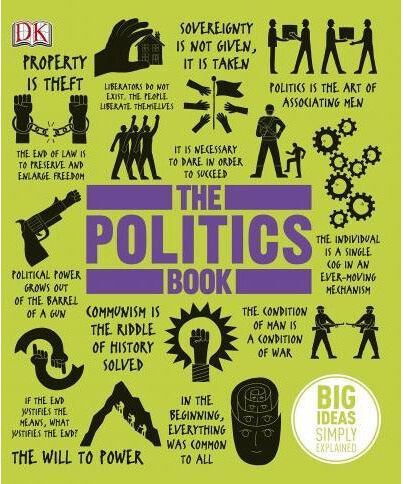
DK The Politics Book - Big Ideas Simply ExplainedThis invaluable; easy-to-understand guide to world politics and government offers an accessible introduction to more than 80 of the most important theories and big ideas of leaders and politicians throughout history. The Politics Book makes government and politics easy to understand by explaining the big ideas simply; using clear language supported by eye-catching graphics. The key events in political history are outlined from the origins of political thinking by Confucius and Aristotle to modern-day activists such as Martin Luther King and Nelson Mandela. Helpful mind maps break down their important concepts into bitesize chunks to make the subject accessible to students of politics and anyone with an interest in how government works. A handy reference section also provides a glossary of key terms and a directory of significant political figures. Filled with thought-provoking quotes from great political thinkers such as Nietzsche; Malcolm X; Karl Marx; and Mao Zedong; The Politics Book gives context to the world of government and power.12,99 £*Shipping: 2,99 £Secure redirect to the provider
-
The Little Book of Politics (DK Big Ideas Series)This politics book is the perfect pocket-sized introduction to politics ideas and political thought throughout history. From the origins of democracy to Machiavelli's cunning statecraft, and from Rousseau's "social contract" to the American Declaration of Independence, Marxist communism, the dawn of populism, and identity politics, The Little Book of Politics examines the philosophies behind the different political beliefs and methods of government used around the world over the course of human history. Packed with diagrams and flowcharts that explain complex concepts in a simple but exciting way, this introduction to politics offers you a combination of clear text and hard-working diagrams in a portable format that is perfect for reading on the go.5,99 £*Shipping: 2,99 £Secure redirect to the provider
-
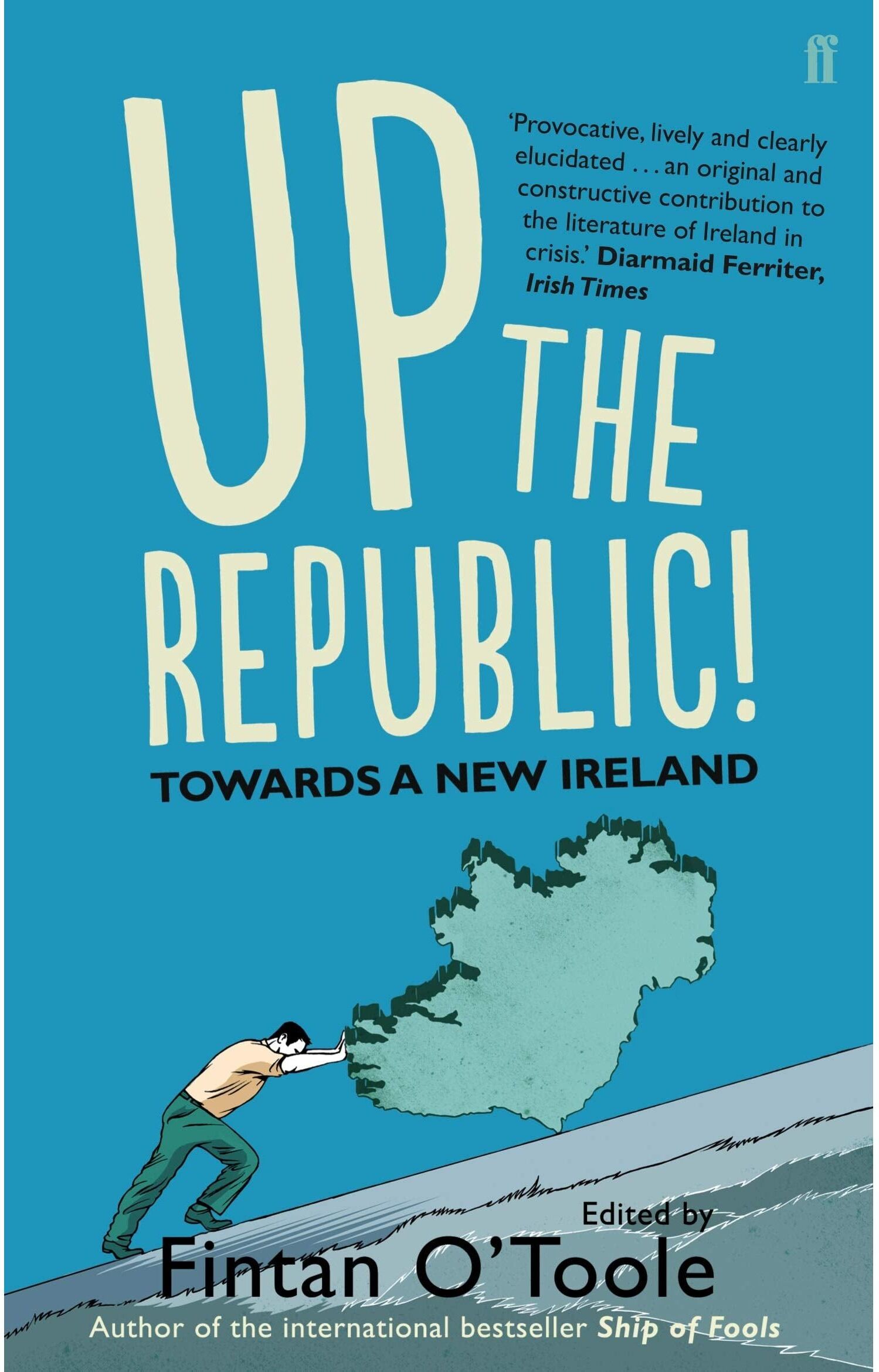
Faber Fintan O'Toole, Up the Republic! (Economic Book, Politics Book)Fintan O'Toole, Up the Republic! (Economic Book, Politics Book) In this important book, historians, lawyers, economists and writers come together to put a coherent case: that although the Irish economic collapse has resulted in national humiliation, renewed emigration and a decline in living standards for the majority of the population, there is still hope that the country can be reformed and renewed. Irish politicians offered the now notorious blanket guarantee to all the banks which had got in over their heads during the great property bubble - including one that had become little more than a criminal enterprise. A different set of politicians grimly enforces the consequences of that guarantee, locking an entire generation of Irish men and women into paying for the mistakes of greedy bankers and their corrupt friends in government. The energy of hope has to come from elsewhere. These essays demonstrate how simple measures and different economic and social policies could release that energy and fulfil the promise of an educated, literate and culturally vibrant people.4,99 £*Shipping: 1,99 £Secure redirect to the provider

-
Who were Max von Baden and Friedrich Ebert?
Max von Baden was a German politician who served as Chancellor of Germany from October to November 1918. He played a key role in the final days of World War I and was instrumental in the abdication of Kaiser Wilhelm II. Friedrich Ebert was a German politician and leader of the Social Democratic Party of Germany. He became the first President of the Weimar Republic in 1919 and played a crucial role in the establishment of the new democratic government in Germany after World War I. **
-
How did Friedrich Ebert end the civil war?
Friedrich Ebert, the first President of the Weimar Republic, ended the civil war in Germany by using a combination of military force and political negotiation. He relied on the support of the military and the Freikorps, a paramilitary organization, to suppress the communist uprising and regain control of key cities. At the same time, Ebert also engaged in negotiations with the leaders of the opposing factions to reach a political settlement. Through a combination of military action and political compromise, Ebert was able to bring an end to the civil war and establish the Weimar Republic as the new government of Germany. **
-
What is the caricature of President Friedrich Ebert from 1919?
The caricature of President Friedrich Ebert from 1919 depicts him as a weak and indecisive leader, representing the challenges and criticisms he faced during his presidency. The caricature often portrays him as being manipulated by more powerful figures, such as the military or big business, highlighting the perception of Ebert as being controlled by outside forces. Additionally, the caricature may emphasize Ebert's role in the controversial decision to use military force to suppress socialist uprisings, further contributing to his negative portrayal. **
-
Why was Friedrich Ebert referred to as a bankruptcy trustee during the 1918 revolution?
Friedrich Ebert was referred to as a bankruptcy trustee during the 1918 revolution because he was seen as the leader of the Social Democratic Party in Germany at the time, and he played a key role in negotiating the abdication of Kaiser Wilhelm II. As the head of the provisional government, Ebert was tasked with managing the transition of power from the monarchy to a democratic system, essentially overseeing the "bankruptcy" of the old regime and the establishment of a new political order in Germany. This comparison highlighted his role in navigating the tumultuous period of political and social upheaval during the revolution. **

Why was Friedrich Ebert referred to as a bankruptcy administrator during the 1918 revolution?
Friedrich Ebert was referred to as a bankruptcy administrator during the 1918 revolution because he was the leader of the Social Democratic Party of Germany and became the Chancellor of Germany during a period of political and social turmoil. As Chancellor, Ebert had to navigate the country through the aftermath of World War I, economic crisis, and the collapse of the German monarchy. He was tasked with managing the transition from imperial rule to a democratic republic, which was a challenging and tumultuous process, hence the comparison to a bankruptcy administrator tasked with restructuring and stabilizing a failing entity. **
Why are Europeans trying to reform/change Islam?
Europeans are trying to reform or change Islam for a variety of reasons. One reason is the desire to promote integration and social cohesion within their diverse societies, as well as to address issues related to extremism and radicalization. Additionally, there is a growing recognition of the need to adapt religious teachings to modern values and norms, particularly in relation to gender equality and human rights. Some Europeans also see the reform of Islam as a way to counter the influence of more conservative or fundamentalist interpretations of the religion. Overall, the goal is to create a more progressive and inclusive form of Islam that is compatible with the values of European societies. **
Top-Angebote
Products related to Ebert:
-
Pan Lily’s Promise by Lily Ebert – Auschwitz Survival Memoir & Inspiring True StoryThe incredibly moving and powerful memoir of an Auschwitz survivor who made headlines around the world. This updated edition includes Lily being awarded an MBE, reaching her hundredth birthday, and the discovery of a long-lost book belonging to her murdered brother – the only tangible link to him that survived the Holocaust. When Holocaust survivor Lily Ebert was liberated in 1945, a Jewish-American soldier gave her a banknote on which he’d written ‘Good luck and happiness’. Many decades later her great-grandson, Dov, decided to use social media to track down the family of the GI – and 96-year-old Lily found herself making headlines round the world. Lily had promised herself that if she survived Auschwitz, she would tell everyone the truth about the camp. Now was her chance. In Lily’s Promise she writes movingly about her happy childhood in Hungary, the death of her mother and two youngest siblings on their arrival at Auschwitz in 1944 and her determination to keep her two other sisters safe. She describes the inhumanity of the camp and the small acts of defiance that gave her strength. From there she and her sisters became slave labour in a munitions factory, and then faced a death march that they barely survived. Lily lost so much, but she built a new life for herself and her family, first in Israel and then in London. It wasn’t easy; the pain of her past was always with her, but this extraordinary woman found the strength to speak out in the hope that such evil would never happen again.4,99 £*Shipping: 1,99 £Secure redirect to the provider
-
Penguin/Pan Lily's Promise by Lily Ebert and Auschwitz by Laurence Rees 2 Books Collection SetLily's Promise by Lily Ebert and Auschwitz by Laurence Rees 2 Books Collection Set Lily's Promise: How I Survived Auschwitz and Found the Strength to Live by Lily Ebert When Holocaust survivor Lily Ebert was liberated in 1945, a Jewish-American soldier gave her a banknote on which he’d written ‘Good luck and happiness’. Many decades later her great-grandson, Dov, decided to use social media to track down the family of the GI – and 96-year-old Lily found herself making headlines round the world. Lily had promised herself that if she survived Auschwitz, she would tell everyone the truth about the camp. Now was her chance. In Lily’s Promise she writes movingly about her happy childhood in Hungary, the death of her mother and two youngest siblings on their arrival at Auschwitz in 1944 and her determination to keep her two other sisters safe. She describes the inhumanity of the camp and the small acts of defiance that gave her strength. From there she and her sisters became slave labour in a munitions factory, and then faced a death march that they barely survived. Auschwitz: The Nazis and The 'Final Solution' by Laurence Rees In this classic book, highly acclaimed author and broadcaster Laurence Rees tells the definitive history of the most notorious Nazi institution of them all. We discover how Auschwitz evolved from a concentration camp for Polish political prisoners into the site of the largest mass murder in history - part death camp, part concentration camp, where around a million Jews were killed. Auschwitz examines the mentality and motivations of the key Nazi decision makers, and perpetrators of appalling crimes speak here for the first time about their actions. Drawing on Rees's landmark documentary and material from the Russian archives, which challenged many previously accepted arguments, this book reveals significant and disturbing facts - from the operation of a brothel to the corruption that was rife throughout the camp.9,99 £*Shipping: 2,99 £Secure redirect to the provider
-
Zaffre/Pan Lily's Promise by Lily Ebert and The Tattooist of Auschwitz Series by Heather Morris 4 Books SetLily's Promise by Lily Ebert and The Tattooist of Auschwitz Series by Heather Morris 4 Books Set Lily's Promise: How I Survived Auschwitz and Found the Strength to Live by Lily Ebert When Holocaust survivor Lily Ebert was liberated in 1945, a Jewish-American soldier gave her a banknote on which he’d written ‘Good luck and happiness’. Many decades later her great-grandson, Dov, decided to use social media to track down the family of the GI – and 96-year-old Lily found herself making headlines round the world. Lily had promised herself that if she survived Auschwitz, she would tell everyone the truth about the camp. Now was her chance. In Lily’s Promise she writes movingly about her happy childhood in Hungary, the death of her mother and two youngest siblings on their arrival at Auschwitz in 1944 and her determination to keep her two other sisters safe. She describes the inhumanity of the camp and the small acts of defiance that gave her strength. From there she and her sisters became slave labour in a munitions factory, and then faced a death march that they barely survived. Three Sisters by Heather Morris When they are little girls, Cibi, Magda and Livia make a promise to their father - that they will stay together, no matter what. Years later, at just 15, Livia is ordered to Auschwitz by the Nazis. Cibi, only 19 herself, remembers their promise and follows Livia, determined to protect her sister, or die with her. Together, they fight to survive through unimaginable cruelty and hardship. The Tattooist of Auschwitz by Heather Morris In 1942, Lale Sokolov arrived in Auschwitz-Birkenau. He was given the job of tattooing the prisoners marked for survival - scratching numbers into his fellow victims' arms in indelible ink to create what would become one of the most potent symbols of the Holocaust. Waiting in line to be tattooed, terrified and shaking, was a young girl. For Lale - a dandy, a jack-the-lad, a bit of a chancer - it was love at first sight. And he was determined not only to survive himself, but to ensure this woman, Gita, did, too. Cilka's Journey by Heather Morris In 1942 Cilka Klein is just sixteen years old when she is taken to Auschwitz-Birkenau Concentration Camp. The Commandant at Birkenau, Schwarzhuber, notices her long beautiful hair, and forces her separation from the other women prisoners. Cilka learns quickly that power, even unwillingly given, equals survival. After liberation, Cilka is charged as a collaborator by the Russians and sent to a desolate, brutal prison camp in Siberia known as Vorkuta, inside the Arctic Circle.12,99 £*Shipping: 2,99 £Secure redirect to the provider
-
DK The Politics Book - Big Ideas Simply ExplainedThis invaluable; easy-to-understand guide to world politics and government offers an accessible introduction to more than 80 of the most important theories and big ideas of leaders and politicians throughout history. The Politics Book makes government and politics easy to understand by explaining the big ideas simply; using clear language supported by eye-catching graphics. The key events in political history are outlined from the origins of political thinking by Confucius and Aristotle to modern-day activists such as Martin Luther King and Nelson Mandela. Helpful mind maps break down their important concepts into bitesize chunks to make the subject accessible to students of politics and anyone with an interest in how government works. A handy reference section also provides a glossary of key terms and a directory of significant political figures. Filled with thought-provoking quotes from great political thinkers such as Nietzsche; Malcolm X; Karl Marx; and Mao Zedong; The Politics Book gives context to the world of government and power.12,99 £*Shipping: 2,99 £Secure redirect to the provider
-
What is the Ebert-Groener Pact?
The Ebert-Groener Pact was a secret agreement made in November 1918 between German President Friedrich Ebert and General Wilhelm Groener, the head of the German army. The pact aimed to ensure the cooperation of the military with the new Weimar government in exchange for the government's support of the army's authority and structure. This agreement helped to prevent a potential military coup and secure the stability of the new German government during a period of political upheaval and revolution. **
-
What is the Dolchstoßlegende by Friedrich Ebert?
The Dolchstoßlegende, or "stab-in-the-back myth," was a conspiracy theory popularized by German political and military leaders after World War I. It claimed that Germany's defeat in the war was not due to military failure, but rather to betrayal by civilians, socialists, and Jews on the home front. Friedrich Ebert, the first President of the Weimar Republic, was accused of being part of this alleged betrayal. The myth was used to shift blame away from the military and aristocracy, and to undermine the legitimacy of the new democratic government. **
-
Who were Max von Baden and Friedrich Ebert?
Max von Baden was a German politician who served as Chancellor of Germany from October to November 1918. He played a key role in the final days of World War I and was instrumental in the abdication of Kaiser Wilhelm II. Friedrich Ebert was a German politician and leader of the Social Democratic Party of Germany. He became the first President of the Weimar Republic in 1919 and played a crucial role in the establishment of the new democratic government in Germany after World War I. **
-
How did Friedrich Ebert end the civil war?
Friedrich Ebert, the first President of the Weimar Republic, ended the civil war in Germany by using a combination of military force and political negotiation. He relied on the support of the military and the Freikorps, a paramilitary organization, to suppress the communist uprising and regain control of key cities. At the same time, Ebert also engaged in negotiations with the leaders of the opposing factions to reach a political settlement. Through a combination of military action and political compromise, Ebert was able to bring an end to the civil war and establish the Weimar Republic as the new government of Germany. **
Similar search terms for Ebert
-
The Little Book of Politics (DK Big Ideas Series)This politics book is the perfect pocket-sized introduction to politics ideas and political thought throughout history. From the origins of democracy to Machiavelli's cunning statecraft, and from Rousseau's "social contract" to the American Declaration of Independence, Marxist communism, the dawn of populism, and identity politics, The Little Book of Politics examines the philosophies behind the different political beliefs and methods of government used around the world over the course of human history. Packed with diagrams and flowcharts that explain complex concepts in a simple but exciting way, this introduction to politics offers you a combination of clear text and hard-working diagrams in a portable format that is perfect for reading on the go.5,99 £*Shipping: 2,99 £Secure redirect to the provider
-
Faber Fintan O'Toole, Up the Republic! (Economic Book, Politics Book)Fintan O'Toole, Up the Republic! (Economic Book, Politics Book) In this important book, historians, lawyers, economists and writers come together to put a coherent case: that although the Irish economic collapse has resulted in national humiliation, renewed emigration and a decline in living standards for the majority of the population, there is still hope that the country can be reformed and renewed. Irish politicians offered the now notorious blanket guarantee to all the banks which had got in over their heads during the great property bubble - including one that had become little more than a criminal enterprise. A different set of politicians grimly enforces the consequences of that guarantee, locking an entire generation of Irish men and women into paying for the mistakes of greedy bankers and their corrupt friends in government. The energy of hope has to come from elsewhere. These essays demonstrate how simple measures and different economic and social policies could release that energy and fulfil the promise of an educated, literate and culturally vibrant people.4,99 £*Shipping: 1,99 £Secure redirect to the provider
-
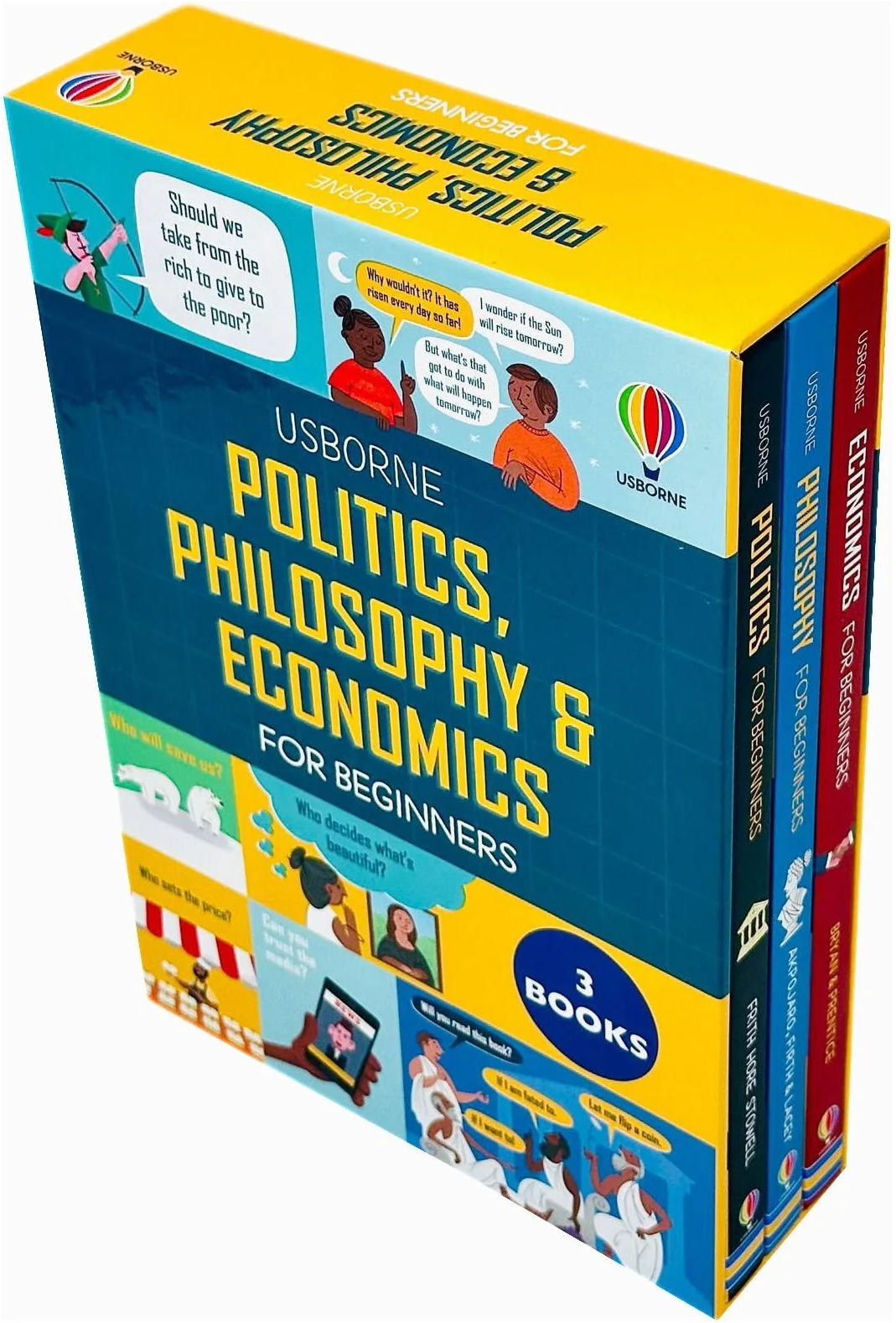
Usborne Big Subjects For Beginners 3 Books Box Set (Politics, Philosophy and Economics)Usborne Big Subjects For Beginners 3 Books Box Set (Politics, Philosophy and Economics) Economics for Beginners Nobody has everything they need, all the time - so how can we make do with what we have? Economics is all about understanding the choices we make to solve this problem. With bright, infographics pictures, this informative book describes why markets. Politics for Beginners With Brexit looming and constant political uncertainty in the UK, people are more confused by politics than ever before. Politics for Beginners answers the questions that people are afraid to ask, offering a no-nonsense guide to what politics is all about. Philosophy for Beginners Philosophy is a way of thinking about just about anything. It asks big questions, such as "how can I be good?" or "what makes something beautiful?" Using lively examples, humorous illustrations and simple thought experiments, this book opens up the world of philosophy to both children and adults and includes links to recommended. Related Tags: Usborne, Usbourne Books14,95 £*Shipping: 2,99 £Secure redirect to the provider
-
O'Neill s O'riginals Reform Vintage T-Shirt in Carob Brown, Size SmallThe O'Riginals Men's Reform Vintage Short Sleeve Tee is crafted from 100% organic cotton with a relaxed fit that moves with you. This O'Riginals tee features garment-dyed fabric and crackle ink graphics for that perfectly worn-in look. Built...38,00 $*Shipping: 0,00 $Secure redirect to the provider
-
What is the caricature of President Friedrich Ebert from 1919?
The caricature of President Friedrich Ebert from 1919 depicts him as a weak and indecisive leader, representing the challenges and criticisms he faced during his presidency. The caricature often portrays him as being manipulated by more powerful figures, such as the military or big business, highlighting the perception of Ebert as being controlled by outside forces. Additionally, the caricature may emphasize Ebert's role in the controversial decision to use military force to suppress socialist uprisings, further contributing to his negative portrayal. **
-
Why was Friedrich Ebert referred to as a bankruptcy trustee during the 1918 revolution?
Friedrich Ebert was referred to as a bankruptcy trustee during the 1918 revolution because he was seen as the leader of the Social Democratic Party in Germany at the time, and he played a key role in negotiating the abdication of Kaiser Wilhelm II. As the head of the provisional government, Ebert was tasked with managing the transition of power from the monarchy to a democratic system, essentially overseeing the "bankruptcy" of the old regime and the establishment of a new political order in Germany. This comparison highlighted his role in navigating the tumultuous period of political and social upheaval during the revolution. **
-
Why was Friedrich Ebert referred to as a bankruptcy administrator during the 1918 revolution?
Friedrich Ebert was referred to as a bankruptcy administrator during the 1918 revolution because he was the leader of the Social Democratic Party of Germany and became the Chancellor of Germany during a period of political and social turmoil. As Chancellor, Ebert had to navigate the country through the aftermath of World War I, economic crisis, and the collapse of the German monarchy. He was tasked with managing the transition from imperial rule to a democratic republic, which was a challenging and tumultuous process, hence the comparison to a bankruptcy administrator tasked with restructuring and stabilizing a failing entity. **
-
Why are Europeans trying to reform/change Islam?
Europeans are trying to reform or change Islam for a variety of reasons. One reason is the desire to promote integration and social cohesion within their diverse societies, as well as to address issues related to extremism and radicalization. Additionally, there is a growing recognition of the need to adapt religious teachings to modern values and norms, particularly in relation to gender equality and human rights. Some Europeans also see the reform of Islam as a way to counter the influence of more conservative or fundamentalist interpretations of the religion. Overall, the goal is to create a more progressive and inclusive form of Islam that is compatible with the values of European societies. **
* All prices are inclusive of VAT and, if applicable, plus shipping costs. The offer information is based on the details provided by the respective shop and is updated through automated processes. Real-time updates do not occur, so deviations can occur in individual cases. ** Note: Parts of this content were created by AI.